Author: Khushboo Aggarwal

Jitendra Shinde (rickshaw driver) gives free hospital trips to thousands

Jitendra Shinde has put his health and personal finances on the line since March 2020

‘There’s no leave in this work,’ says Jitendra Shinde, a rickshaw driver in Kolhapur city who has dropped over 15,000 patients to hospital for free. Sanket Jain for The National
Often people get to know of Jitendra from patients he has helped. Sanket Jain for The National
Jitendra dropping a patient to a hospital on the outskirts of the city. Sanket Jain for The National
First, he sanitises the hands of the passengers and only then allows them to sit. Sanket Jain for The National
Jitendra takes all the precautions before dropping any Covid patient. Sanket Jain for The National
He spent 5,000 rupees on PPE kits. Jitendra takes all the precautions before dropping any Covid patient. Sanket Jain for The National
Jitendra drops patients to any hospital in Kolhapur city free of charge. Sanket Jain for The National
Jitendra drops the patients to any hospital in Kolhapur city for free. Sanket Jain for The National

A selfless Indian rickshaw driver has worked tirelessly to ferry 15,000 people to hospital during India’s Covid-19 crisis.

Jitendra Shinde, 50, says that 1,000 of his passengers had Covid-19 symptoms.

Each and every one has been recorded in a diary kept by the driver, who has put his health and personal finances on the line to help society.

When Mr Shinde first wore personal protection equipment, the entire community was scared. Little did they know he was on a mission.

“No one came close to me,” he remembers. He started using his auto rickshaw to help Covid-19 patients.

“It was an SOS call. A labourer whose oxygen saturation level fell below 90 had tested Covid-positive and he dialled me,” Mr Shinde said.

This was in the last week of March 2020.

Mr Shinde quickly dropped the labourer off at the Kolhapur’s CPR hospital in western India’s Maharashtra state.

Fourteen days later, he got a call from the same labourer: “I’ve defeated Covid.”

With a sigh of relief, Mr Shinde moved on to the next call, another request to drop a patient at the nearest hospital.

He receives several hundred SOS calls every week and ferries patients with any medical illness to hospitals in Kolhapur city for free.

He first started this community service on March 24, 2020 – the day Indian Prime Minister Narendra Modi declared the world’s biggest lockdown, affecting 1.3 billion people.

Within a year, he ferried more than 15,000 people – about 40 a day – including more than 1,000 coronavirus patients.

“If someone tests Covid positive, society makes them a pariah. How will such people reach hospitals or quarantine centres?” Mr Shinde asks.

With India now reporting over 300,000 cases in a day, health infrastructure is strained beyond capacity across most of the country.

Mr Shinde continuously seeks updates on the number of vacant beds in hospitals and quarantine centres.

“First, I ask people their location, the problems they are facing, and then I take them to the nearest possible hospital.”

His list of passengers includes pregnant women and people with disabilities.

“Within a year, I dropped off 70 pregnant women to hospitals,” he says.

To ensure safety, he always sanitises the hands of the patients before letting them enter the auto rickshaw.

Kolhapur district, which has the highest death rate in Maharashtra, at 2.7 per cent, is in the middle of a humanitarian crisis.

“In several cases, no one comes to lift the bodies of the deceased Covid patients,” Mr Shinde says.

At such times, he helps to transport the bodies and to perform the death rituals according to their beliefs, ensuring the dignity of the victims is not lost.

While ambulances in Delhi and other parts of India are charging as much as 8,500 rupees ($115) for a five-kilometre journey, he will not take any money.

So far, Mr Shinde has spent 150,000 rupees of his savings to help people. He spent another 5,000 rupees to buy PPE kits.

“No one has come forward to help me, and neither do I expect them to,” he says.

“Every day I have to spend at least 200 rupees on fuel.”

Mr Shinde explains how people still fear him when he wears PPE.

“They think I am Covid-positive, or I might spread the virus.”

For recovering Covid patients and those in home isolation, he delivers medicine, vegetables and essential groceries, funding everything through paid trips for passengers who are not ill.

Mr Shinde’s work comes with its own set of challenges.

“Fellow rickshaw drivers don’t allow me to park my auto in the stand. They shun me, saying, ‘What if you infect us?’”

Mr Shinde suspects that some of them stole 5,000 rupees from his rickshaw a few months back.

“I don’t care about the money lost, but they even stole my diary where I had written the names of the patients I helped.”

He says his motivation to help comes from his childhood when “I couldn’t even bid goodbye to my ailing parents with dignity”.

Mr Shinde was only 10 years old.

“Whenever I help any patient, it feels like I am helping my parents and that’s why I do this work every day,” he explains.

Last year, for seven months, he would isolate himself after returning from work.

“Now, I’ve taken both doses of the vaccine,” Mr Shinde says. “However, I still wear a mask.”

He responds to his call of unpaid duty in the quickest possible way.

“I am not allowed to use a siren in my auto but when it’s an emergency, I put it on. What will you do if the patient dies?” he asks.

There have been times he was caught by the local police for breaking the lockdown rules. He tries to explain the urgency of the issue, but if nothing works, “I dial the senior police officials, who let me go”.

Not a day goes by that Mr Shinde does not hear from people he helped.

“That joy is what I live for,” he says.

In the August 2019 floods that devastated western Maharashtra, he saved about 500 people from the nearby village of Chikhali.

“I would drop the rescued villagers to safer places,” he says proudly. He also distributes food to the homeless and daily wage earners who lost their jobs in the lockdown.

He travels as far as 110km to the villages of Belagavi district on the border of Karnataka state to help patients.

Mr Shinde is proud of not turning away any request.

“People donate to temples. I spend money to save lives,” he says. Now, he dreams of starting an old people’s home.

“Tens of people should come forward and help others,” he says. “If my life story inspires someone, I will have done my job.”

Source: India’s Covid-19 crisis: rickshaw driver gives free hospital trips to thousands | The National (thenationalnews.com)
Categories: Individuals

Javed Khan (Bhopal) converted his vehicle into an ambulance

This auto-rickshaw driver, Javed Khan, in Bhopal has converted his vehicle into an ambulance, complete with oxygen, and he serves people for free. Khan spends around Rs 600 a day filling up oxygen.


Javed Khan, 34, was driving his auto-ambulance to pick up a COVID-19 patient – 57-year-old Madan Singh – from Ayushman Hospital to take him to Narmada Hospital in Bhopal when the police stopped him at a barricade. They did not allow him to proceed, citing COVID-19 restrictions. The police did not budge even as Khan tried to reason with them that he was only ferrying COVID-19 patients in his autorickshaw. Instead, he was detained and held for two hours.

On Saturday, Khan had received a frantic call from Yogini Thakur, Singh’s daughter, after she was unable to book a normal ambulance. Singh had been admitted to Ayushman Hospital two days earlier, after testing positive for the novel coronavirus, but needed to be transferred for treatment. “We had to struggle to find a bed,” Thakur said.

The police action proved fatal; nobody came to pick Singh up and after hours of waiting, he died at Ayushman Hospital.

“The police held me for two hours even as I told them that I have to pick up a critical patient,” Khan said. Even pleas from Singh’s wife, who visited the police station to seek Khan’s release, did not move the police, Khan continued. “But when they eventually let me go, the patient’s condition had worsened and doctors said there was no point in shifting him then.”

Police even filed an FIR against Khan, alleging that he violated COVID-19 norms. “We held him for flouting Section 144 norms and filed an FIR under Section 188; he was later released and provided a special pass when we learnt of his social services,” the station house officer at Chola Mandir police station, where Khan was detained, told The Wire.

Khan, however, expressed dismay at the police’s behaviour. “How can they just detain me like that? The road was barricaded and they did not allow me to pass. I told them I was on my way to hospital and showed them the oxygen cylinder. On seeing the cylinder they began accusing me of illegally transporting cylinders,” said Khan, who has been relentlessly ferrying COVID-19 patients in his autorickshaw-ambulance in Bhopal for the past 20 days.

The Wire approached Inspector General of Police, Bhopal A. Sai Manohar to ask him whether the department will investigate the matter. He responded, saying, “I think the Bhopal Police have clarified already.” He shared a statement in Hindi which accuses Khan of removing barricades in violation of the restriction order due to which he was booked under Section 188 and later released. “He was neither arrested nor was the oxygen cylinder in his auto seized. There is no police case against Javed,” reads the statement, adding that Javed is being issued a special pass for service so that he does not face any problems.

Many have hailed Khan as a ‘hero’ and admired him for his selfless initiative.

In early April, when the COVID-19 situation in Bhopal started worsening, Khan felt that the city was facing a shortage of ambulances as critical cases surged. He was moved by the painful visuals and news stories on TV showing poor patients unable to afford an ambulance. He decided to turn his autorickshaw into a free ambulance for COVID-19 patients. His auto is equipped with an oxygen cylinder, PPE kit, sanitiser and also an oximeter.

Khan, who normally earned Rs 200-300 per day, has limited financial resources. To obtain an oxygen cylinder, he sold his wife’s necklace for Rs 5,000. Now he is using his savings for refuelling. For now, he has decided to halt the monthly instalments he would make towards repaying his vehicle loan.

Khan has made his contact number available on social media. He receives around 5-6 calls a day for the past 20 days, he said, adding that he doesn’t accept payment from anyone.

“Javed bhai is very quick with help,” said Naman Rai, who has in the last ten days contacted Khan three times. On Monday, he said, Khan ferried an aged mother of a vegetable vendor to the hospital while her oxygen levels were steadily dropping. “The family is very poor, when I came to know they needed an ambulance, I contacted Javed since his services are free. He reached the location within 10-12 minutes,” Rai recalled. In another instance, Khan, on call from Rai, transported an oxygen cylinder from Jahangirabad locality needed for a COVID-19 patient who was gasping for breath in Chunabhatti area of the city.

Bhopal on Monday reported 1,669 new COVID-19 cases, taking the total tally reported in the city since the beginning of the pandemic to 94,803. The city officially reported 12 deaths on Monday.

Official numbers belie the data from crematorium and graveyards. A report surveying two cremation grounds in Bhopal noted that a total of 187 bodies were cremated at the two sites under COIVD-19 protocols on one day, while the official COVID-19 death toll remained at five. Another report noted that on April 10, 11 and 12, 56, 68 and 59 bodies were cremated in the city, while the official bulletin stated only 24, 24 and 37 COVID-19 deaths respectively, across the entire state.

Several people across the country – including Muslim organisations and individuals – have stepped up to provide succour to the needy amidst the unprecedented health crisis, even as the government response appears to flounder. They are supplying medical aid and oxygen cylinders; opening up mosques to serve as isolation centres; volunteering at hospitals and helping perform people’s last rites.

Some notable examples – from a much longer list – include Pyare Khan, a transporter in the city of Nagpur who donated two tankers of 32 tonnes of oxygen worth Rs 10 million for free to hospitals; Shahnawaz Sheikh who sold his cab to provide oxygen to 250 COVID-19 patients; and welding shops in Delhi’s Shaheen Bagh that are now supplying oxygen cylinders.

Rushda Fathima Khan is an independent journalist based in Bangalore.

Source: In Bhopal, Police Action Against Auto-Ambulance May Have Cost COVID Patient His Life (thewire.in)

Categories: Individuals

Manoj Gupta refilling oxygen cylinder at Re 1

Manoj Gupta, manager of a stainless steel factory in Uttar Pradesh’s Hamirpur district, has opened the oxygen plant of the factory for all.

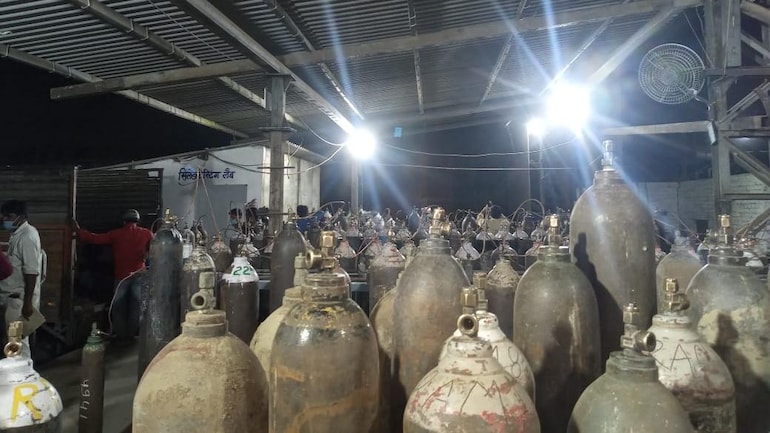
A glimpse of Manoj Gupta's factory. He refills almost 1500 oxygen cylinders every day.
A glimpse of Manoj Gupta’s factory. He refills almost 1500 oxygen cylinders every day.

Grief and devastation are palpable as the country battles the second wave of the novel coronavirus. In these testing times, some are doing their best to help society cope with the crisis. Our Covid Hero today is Manoj Gupta, manager of the Rimjhim Ispat Factory in the Sumerpur Industrial Area of Hamirpur, Uttar Pradesh. Yogesh Agarwal, managing director and owner of the factory, and Manoj have opened their factory to refill oxygen cylinders at Re 1 each.

COVID HERO FROM HAMIRPUR, MANOJ GUPTA

Explaining how his stainless steel plant is proving useful in supplying oxygen, Manoj said, “Oxygen is used to make stainless steel, so we have oxygen plants of different capacities. We use that oxygen directly in the steel-making raw material. Seeing the Covid crisis unfold in front of my eyes, Yogesh Agarwal and I decided to provide oxygen to people in need as a charity.”

He added, “We decided to supply oxygen for free. We are charging Re 1 because we have to do billing for the oxygen we produce, because it is counted as our product.”

‘WE ARE FILLING ALMOST 1,500 CYLINDERS EVERY DAY’

People from far off places are coming to get oxygen cylinders filled at this factory. Telling us about the same, he said, “We are filling 1,500 cylinders every day. It takes one hour to fill one cylinder, along with the unloading and loading time. 24 cylinders can be filled at a time at our plant. People from far off places like Aligarh, Noida, Lucknow, Banaras and more are coming to our plant to get oxygen filled. We are supplying oxygen to hospitals and also to individuals who immediately need oxygen. They just need to show a medical certificate and we immediately provide them with oxygen.”ADVERTISEMENT

“Since we directly use oxygen as our raw material, we don’t have oxygen cylinders, but people can bring their cylinders and get the oxygen filled here,” he added.

‘I WAS ADMITTED TO HOSPITAL WITH COVID LAST YEAR’

Manoj has himself been a Covid patient and his battle with the virus nudged him to help those in need today. He said, “I can closely relate to the fear that Covid patients are facing right now. Last year, I tested positive for the virus. I was in the last stage when I was admitted to the hospital. After testing negative, it took me six-seven months to recover completely from the virus. This time, the strain of the virus is more devastating. So, I just wanted to do my bit to help people and which is why we opened our oxygen plant for everyone.”ADVERTISEMENT

‘WE NEED MORE FACTORIES TO PRODUCE LIQUID OXYGEN’

Talking about the shortage of oxygen cylinders, Manoj said, “There are two types of plants. One that produces dry oxygen, and the other that produces liquid oxygen. Dry oxygen cannot be transported to far off places as it evaporates quickly. Liquid oxygen is the only type of oxygen that is transported in bulk. But Uttar Pradesh doesn’t have many factories that produce liquid oxygen.”

Personal experience drove Manoj Gupta to help Covid patients in need.

Source: Covid Hero of the Day from Hamirpur: Manoj Gupta refilling oxygen cylinder at Re 1 – Lifestyle News (indiatoday.in)

Categories: Individuals

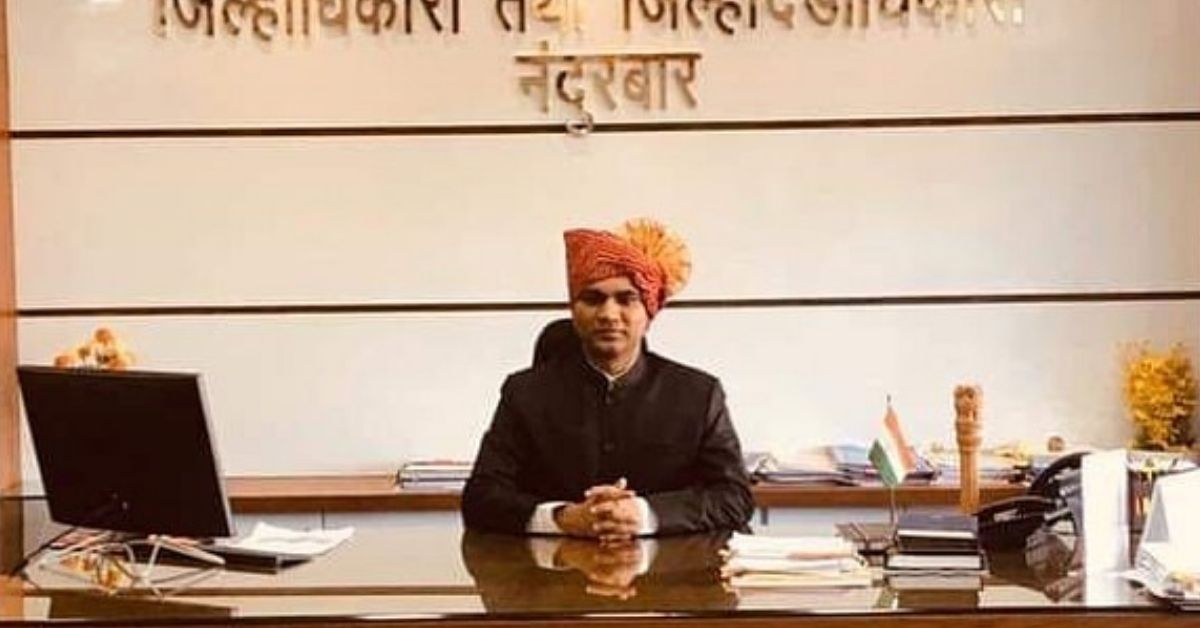
Meet The IAS Officer Who Reduced His District’s Covid Spike by 75%

How This IAS Officer Cut Nandurbar’s Single-Day COVID-19 Spike By 75%

Dr Rajendra Bharud, District Collector of Nandurbar in Maharashtra, has managed to keep his district afloat even amid the second wave of coronavirus, with adequate oxygen supply, beds, a well-planned vaccination drive and systematic preparation beforehand. He tells us how he achieved this feat.

  • POST AUTHOR: GOPI KARELIA

In Maharashtra’s Nandurbar, a district with a population of over 16 lakh, the story of the second wave of coronavirus reads differently than the rest of the country. While India’s healthcare infrastructure finds itself overwhelmed by the surge in cases, it’s a pleasant surprise to see that in times like these, the district has 150 vacant beds and two oxygen plants that have a combined capacity to produce 2,400 litres per minute. 

Due to its sufficient resources and robust health infrastructure, people from neighbouring districts and states (including Madhya Pradesh and Gujarat), have been admitting themselves in Nandurbar. But even with this added caseload, the district has managed to not only control the positivity rate, but also slash it by 30%. The daily active cases have decreased from 1,200 to 300. 

Nandurbar District Collector Dr Rajendra Bharud and his team, comprising administration staff, doctors and volunteers, are to be credited for this feat. After the steady decline in cases, as well as assurances from the Central government regarding the amping of the vaccination programme, many other cities and villages began dismantling their temporary COVID-19 facilities. However, Dr Rajendra did not let his guard down. 

Instead, he decided to ramp up infrastructure in case there was a resurgence of cases. “As cases were going down in India, I saw America and Brazil face a massive surge. I wanted to be prepared in case we witnessed something similar. So in September 2020, we installed the first oxygen plant in the district, which had a capacity to produce 600 litres per minute, even though our highest single-day spike was only 190 cases. In March, we installed another plant. As single-day cases touched 1,200 in April, we started preparing to install the third one. Soon, we will have plants with a combined capacity of 3,000 litres per minute,” Dr Rajendra, who holds an MBBS degree, tells The Better India.

Dr Rajdenra shares his systematic plan to tackle this second wave of highly infectious variants. 

A people-friendly system 

Money was a crucial component in setting up a robust healthcare structure, which includes ambulances, ventilators, beds, oxygen plants, vaccines, medicines, staff, a website, and control rooms in every block. Dr Rajendra used a combination of resources, including district planning and development funds, state disaster relief funds, and CSR to meet expenses. 

“We didn’t want our doctors to be under any kind of pressure, and provided them with everything they needed, even if that meant spending Rs 85,00,000 per oxygen plant. Oxygen cylinders are manufactured only in certain states, so by the time they arrive, several lives are at risk. Our plants directly extract air and provide oxygen through pipes to the patients. We also made sure that oxygen pipes were given as soon as saturation levels started dropping, instead of waiting for the critical stage. This way, patients use only 30% of oxygen, as against 90% in the latter situation. When oxygen starts dropping, it directly affects the brain and kidney, which makes it harder for patients to recover fast. Hence, oxygen levels need to be managed and taken care of in the early stages itself,” says Dr Rajendra. 

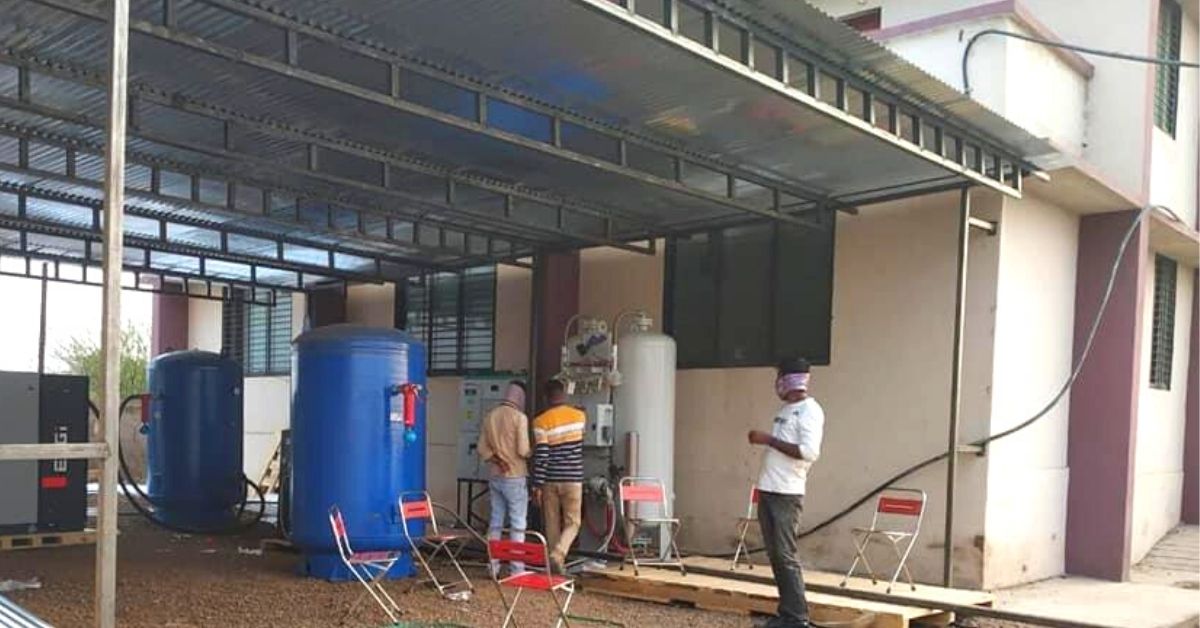
An oxygen plant in the district

Places such as schools and community halls were converted into COVID-19 centres. The administration set up 7,000 beds just for isolation, and 1,300 beds were equipped with ICU or ventilator facilities. They also purchased 27 ambulances to bring patients to the hospital and 2 ambulances to move dead bodies. Remdesivir worth Rs 50,00,000 was purchased. 

One of the early steps taken by the administration was creating a website and control room to help control the panic and systematically guide the citizens. This would also ensure that people were not running from pillar to post in search of beds. 

During the first wave, the district had faced a massive crunch in terms of frontline doctors. Since there are no medical colleges in the region, finding experts was a challenge. So, Dr Rajendra roped in all local doctors and trained them to perform vital procedures such as intubation and monitoring oxygen levels. 

He has also made sure that vaccination drives are being carried out smoothly. Of the 3,00,000 individuals aged above 45, one lakh have already received the first dose. This is despite the lack of awareness around vaccination drives in the tribal district. 

“Instead of calling people to us for vaccination, we allotted 16 vehicles to every part of the district to give the vaccine. This way, people didn’t have to travel in hilly terrains. We roped in teachers and sarpanches to spread the word about the seriousness of the situation, and it worked,” adds Dr Rajendra. 

With collective efforts from the Nandurbar administration, frontline workers and people, this tribal district made itself self-reliant in every way. Moreover, Dr Rajendra’s journey of becoming an IAS officer is inspiring. He was born in Samode taluka of the district to a single mother. He lived in a hut, studied in a government school, and worked his way up.

Edited by Divya Sethu

Source: How This IAS Officer Cut Nandurbar’s Single-Day COVID-19 Spike By 75% (thebetterindia.com)

Categories: Community

Chandira, a tailor by profession stitching and donating masks

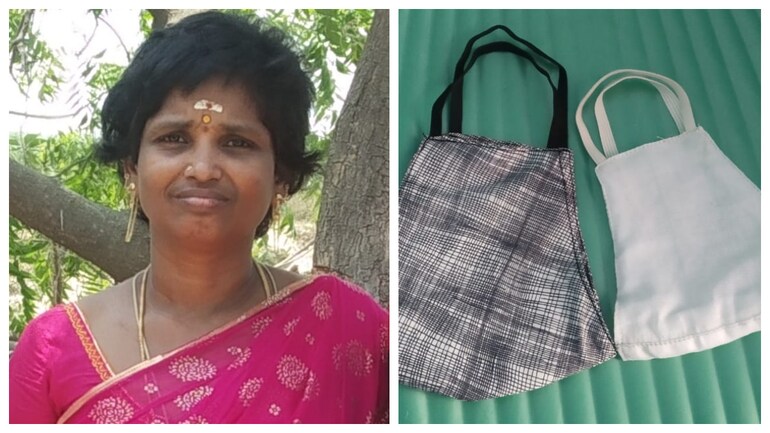
Chandira, a tailor by profession, has been stitching cloth masks ever since the start of the pandemic and has been providing it for free. Her husband Karunakaran, who is an auto driver, is also helping her.

Chandira is a tailor who stitches cloth masks and donates them for free.

Covid-19 has brought out the worst in the coronavirus and the best in some people. Our Covid Heroes today are Chandira and Karunakaran, a couple from Chennai who has been stitching cloth masks and giving them out for free. And they have been silently doing this ever since the pandemic began in India. In over a year, they have been reasons for people to believe in humanity.

CHANDIRA’S IDEA OF DONATING MASKS

When the Covid-19 pandemic began last year in India, every doctor and news channels said that face masks could help prevent the spread of the novel coronavirus. When not everyone could get their hands on an N-95 mask or a surgical mask, only cloth masks came to everyone’s rescue.

Chandira is a tailor at an export company. It was then that she decided to put her free time to use. Speaking to IndiaToday.in, she said, “I saw a lot of small pieces of cloth lying around me. They all go to waste. I decided to put them to good use. I picked up the waste bits lying around and decided to stitch masks. These are not discarded because of bad quality or anything. These cloth pieces are called extras. So, why not turn them into a mask?”ADVERTISEMENT

Chandira also added that she buys the elastic out of her own money for the masks. “I am spending whatever I have left for the masks. I buy the elastics for the masks and I always have a bunch of it in my bag,” she said.

At first, Chandira distributed the cloth masks to her neighbours and relatives. “When the demand for masks increased, I took the help of my husband Karunakaran. He is an auto driver and meets several people every day. With his help, I made sure the masks reached a wider section of people,” she said.

BREATHABLE MASKS ARE TOP PRIORITY

Once Chandira started stitching masks, she understood that they have become a staple in our lives. “The masks assure safety. So, I told my husband to hand them over to his customers and to those who are in his auto stand at Kodambakkam, Chennai,” she said.

Many people complain that they cannot breathe properly in N-95 or surgical masks. Though these masks offer better protection, people seek help in cloth masks as they are breathable.

Speaking about the fabric, Chandira said, “I make sure the material I pick is 100 per cent cotton. Other materials such as polyester, linen are not breathable in. After I gave out the masks for free, many approached me asking me to make it for their family.”ADVERTISEMENT

MANAGING A FAMILY AND HELPING PEOPLE

Chandira is managing a family of five, which includes her husband, daughter, son and daughter-in-law. “They do not know how to stitch and hence I do it whenever I find the time. I spend 10 minutes every day for lunch and the remaining time, I stitch masks apart from handling work at the export company,” she said.Karunakaran, an auto-driver in Kodambakkam, Chennai.

Karunakaran, her husband, said, “We haven’t kept count of how many masks we have given out so far. That could be more than 500 masks. Masks are important, and I make sure people who ride in my auto wear one. If they forget it, I will hand over a mask if I have a spare that my wife stitched. This is the least we can do for our society.”

WHO (World Health Organisation) has stressed the importance of double masking. If you wear a cloth mask, it is imperative to wear a surgical mask above or underneath it.

Source: Covid Heroes of the Day from Chennai: Tailor-auto driver couple stitch and donate masks – Lifestyle News (indiatoday.in)

Categories: Individuals