Mount Carmel School, Dwarka has converted it’s auditorium into a makeshift 40 bed hospital having medical staff, oxygen concentrators, and other medical facilities.
A very kind gesture by the Pvt School when it has lost its chairman to Covid just two weeks back.
In a first, one of Delhi’s prominent private schools, Mount Carmel School in Dwarka Sector 22, is set to function as a covid care centre with 100 oxygen beds for patients requiring oxygen support.
Out of the total beds, 50 will be set up in the school’s auditorium, and these will accommodate the most serious cases. A constant supervision of the doctors will be ensured to these patients. The others will be accommodated in classrooms, each of which will house four beds.
Men and women will be treated on different floors of the school building.
Last week, founder of Mount Carmel Schools, V.K. Willams passed away due to the virus while his wife, Neena Williams is still battling the disease. His son and Dean, Mount Carmel Schools, Michael Williams said that the idea to open the covid centre had gained momentum before the family had been struck by the disease.
“My sister Joanna Gokavi and brother-in-law Sunil Gokavi are both doctors. About a month ago, we and other members of the church were wondering how we can help the city through this difficult time and we though of a treatment centre for mild cases in the city. Since schools are shut, our building was available and people in Dwarka who are panicked and looking fo oxygen can come here. Different churches across the world came forward to help put together resources,” he said.
Dr. Joanna and Dr. Sunil Gokavi, along with two of their friends, will be the four doctors on duty, round the clock. A group of 75 volunteers, with doctors and nurses from Christian hospitals and non-medical volunteers, will work in shifts according to their availability.
“It’s meant to cater to patients with oxygen levels between 90 and 94% where little doctor intervention is required. We have tie ups with Venkateshwara and St. Stephen’s Hospitals for consultations if any patient’s condition deteriorates,” said Williams.
The organizers said that members of their network in South Korea have helped them set up two oxygen generating plants through which 1500 100 kg oxygen cylinders can be refilled in a day.
While government schools across the city have been functioning as vaccination and isolation centres, this is the first case of a private school in the city operating as a covid care facility.
Despite the severe threat of the Covid-19 pandemic in Delhi, India ??65 Catholic Volunteers are considering their lives to help their suffering countrymen who are unable to bury their loved ones in a proper burial. life. pic.twitter.com/PZUal0j3sY
Thank you Vasu Primlani for saying Thank you to the Sikhs. Your words are our strength and motivation. May your words continue to inspire many more to serve humanity, not only in these times of distress and disease but even during easy times.
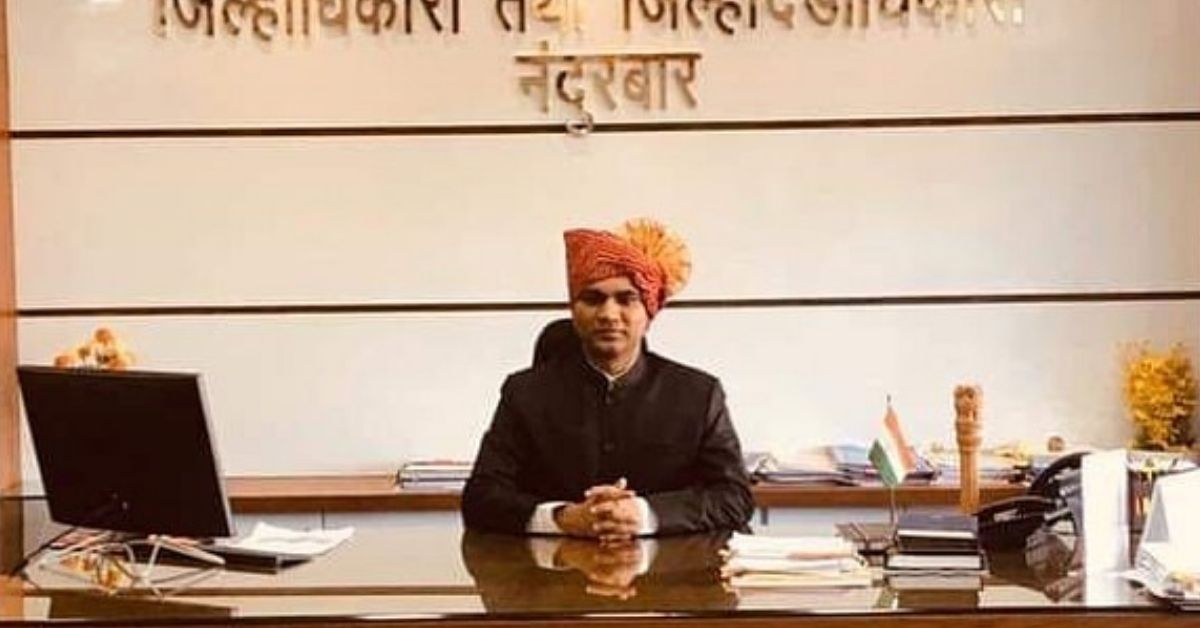
How This IAS Officer Cut Nandurbar’s Single-Day COVID-19 Spike By 75%
Dr Rajendra Bharud, District Collector of Nandurbar in Maharashtra, has managed to keep his district afloat even amid the second wave of coronavirus, with adequate oxygen supply, beds, a well-planned vaccination drive and systematic preparation beforehand. He tells us how he achieved this feat.
POST AUTHOR: GOPI KARELIA
In Maharashtra’s Nandurbar, a district with a population of over 16 lakh, the story of the second wave of coronavirus reads differently than the rest of the country. While India’s healthcare infrastructure finds itself overwhelmed by the surge in cases, it’s a pleasant surprise to see that in times like these, the district has 150 vacant beds and two oxygen plants that have a combined capacity to produce 2,400 litres per minute.
Due to its sufficient resources and robust health infrastructure, people from neighbouring districts and states (including Madhya Pradesh and Gujarat), have been admitting themselves in Nandurbar. But even with this added caseload, the district has managed to not only control the positivity rate, but also slash it by 30%. The daily active cases have decreased from 1,200 to 300.
Nandurbar District Collector Dr Rajendra Bharud and his team, comprising administration staff, doctors and volunteers, are to be credited for this feat. After the steady decline in cases, as well as assurances from the Central government regarding the amping of the vaccination programme, many other cities and villages began dismantling their temporary COVID-19 facilities. However, Dr Rajendra did not let his guard down.
Instead, he decided to ramp up infrastructure in case there was a resurgence of cases. “As cases were going down in India, I saw America and Brazil face a massive surge. I wanted to be prepared in case we witnessed something similar. So in September 2020, we installed the first oxygen plant in the district, which had a capacity to produce 600 litres per minute, even though our highest single-day spike was only 190 cases. In March, we installed another plant. As single-day cases touched 1,200 in April, we started preparing to install the third one. Soon, we will have plants with a combined capacity of 3,000 litres per minute,” Dr Rajendra, who holds an MBBS degree, tells The Better India.
Dr Rajdenra shares his systematic plan to tackle this second wave of highly infectious variants.
A people-friendly system
Money was a crucial component in setting up a robust healthcare structure, which includes ambulances, ventilators, beds, oxygen plants, vaccines, medicines, staff, a website, and control rooms in every block. Dr Rajendra used a combination of resources, including district planning and development funds, state disaster relief funds, and CSR to meet expenses.
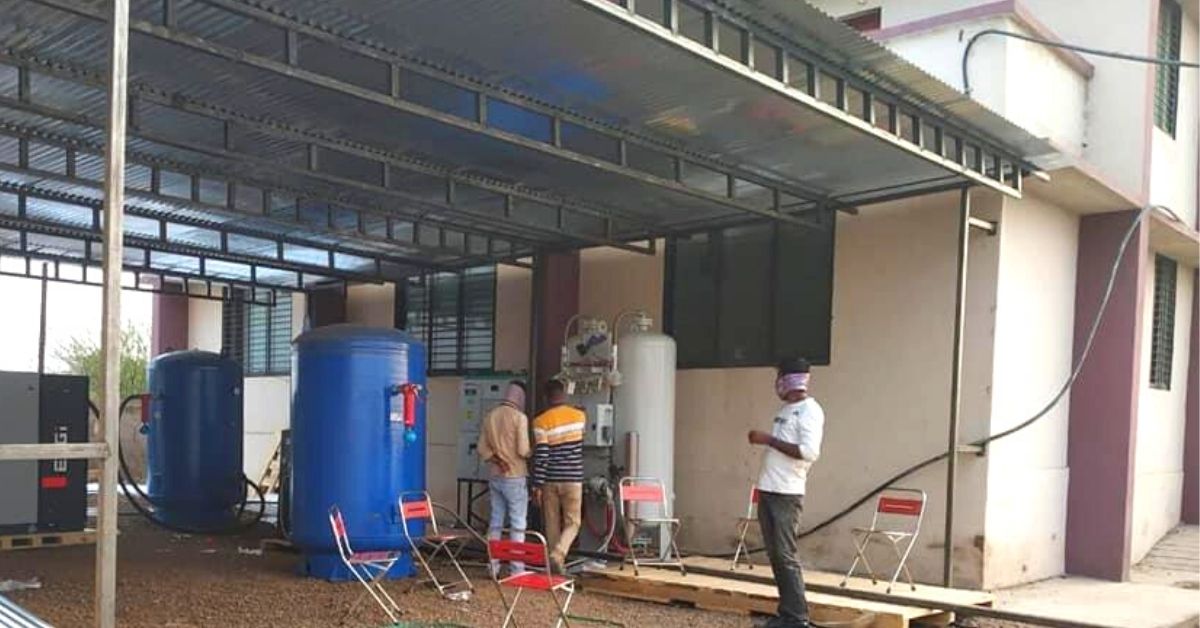
“We didn’t want our doctors to be under any kind of pressure, and provided them with everything they needed, even if that meant spending Rs 85,00,000 per oxygen plant. Oxygen cylinders are manufactured only in certain states, so by the time they arrive, several lives are at risk. Our plants directly extract air and provide oxygen through pipes to the patients. We also made sure that oxygen pipes were given as soon as saturation levels started dropping, instead of waiting for the critical stage. This way, patients use only 30% of oxygen, as against 90% in the latter situation. When oxygen starts dropping, it directly affects the brain and kidney, which makes it harder for patients to recover fast. Hence, oxygen levels need to be managed and taken care of in the early stages itself,” says Dr Rajendra.
An oxygen plant in the district
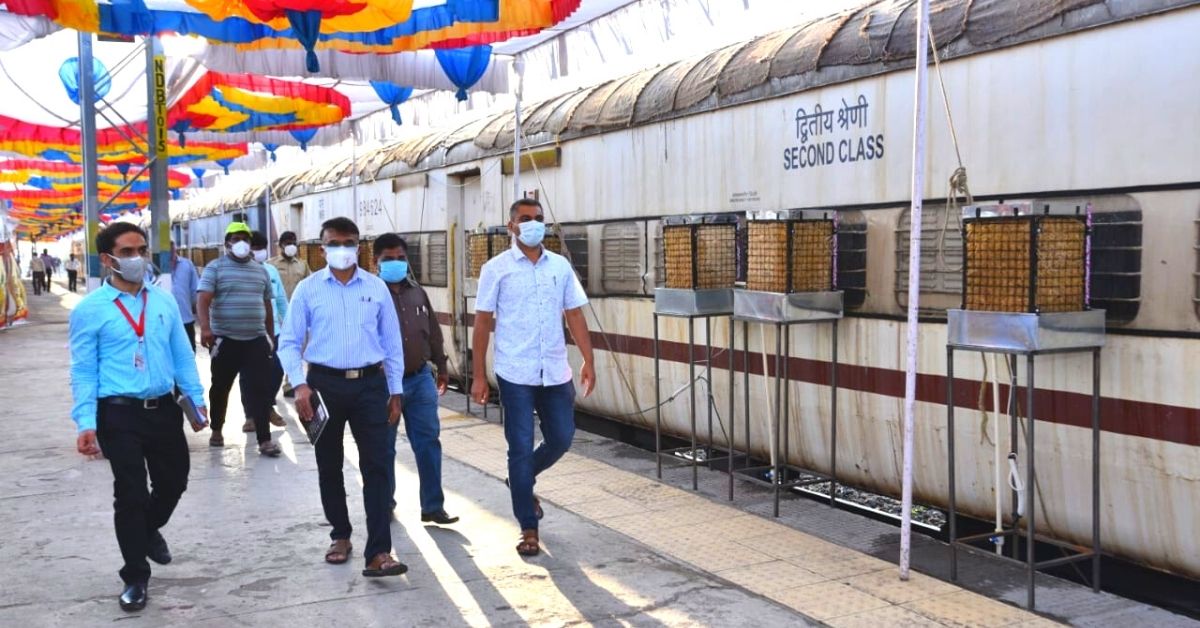
Places such as schools and community halls were converted into COVID-19 centres. The administration set up 7,000 beds just for isolation, and 1,300 beds were equipped with ICU or ventilator facilities. They also purchased 27 ambulances to bring patients to the hospital and 2 ambulances to move dead bodies. Remdesivir worth Rs 50,00,000 was purchased.
One of the early steps taken by the administration was creating a website and control room to help control the panic and systematically guide the citizens. This would also ensure that people were not running from pillar to post in search of beds.
During the first wave, the district had faced a massive crunch in terms of frontline doctors. Since there are no medical colleges in the region, finding experts was a challenge. So, Dr Rajendra roped in all local doctors and trained them to perform vital procedures such as intubation and monitoring oxygen levels.
He has also made sure that vaccination drives are being carried out smoothly. Of the 3,00,000 individuals aged above 45, one lakh have already received the first dose. This is despite the lack of awareness around vaccination drives in the tribal district.
“Instead of calling people to us for vaccination, we allotted 16 vehicles to every part of the district to give the vaccine. This way, people didn’t have to travel in hilly terrains. We roped in teachers and sarpanches to spread the word about the seriousness of the situation, and it worked,” adds Dr Rajendra.
With collective efforts from the Nandurbar administration, frontline workers and people, this tribal district made itself self-reliant in every way. Moreover, Dr Rajendra’s journey of becoming an IAS officer is inspiring. He was born in Samode taluka of the district to a single mother. He lived in a hut, studied in a government school, and worked his way up.
Edited by Divya Sethu
Source: How This IAS Officer Cut Nandurbar’s Single-Day COVID-19 Spike By 75% (thebetterindia.com)
In 2019 summer, I was invited as a guest to GSC-WCC Interfaith meeting by a fellow Sikh from St. Gallen in Switzerland.. This was the first high level meeting between Christians & Sikhs organised by the tireless efforts of Gurdeep singh Kundan.
On 5 July 2019, the World Council of Churches (WCC) will convene its first-ever formal Christian-Sikh dialogue. In commemoration of the 550th birth anniversary of Guru Nanak, the first guru of the Sikhs, the dialogue is being held as the Global Sikh Council meets in Switzerland.
I met a lot of interesting Sikhs from UK, USA, Malaysia, France, India, … Hearing them encouraged me to do some work for my community.
This resulted in a Directory of Sikh NGO’s worldwide at SmartSikh.org
Thanks to Gurdeep Singh Kundan, Switzerland for channeling my energies to the causes of the Sikh community and putting me in contact with lots of great people.